Buy kleinteile.eu ?
We are moving the project
kleinteile.eu .
Are you interested in purchasing the domain
kleinteile.eu ?
domain@kv-gmbh.de · 0541-91531010
Buy kleinteile.eu ?
How is the ion lattice formed in ionic bonding?
In ionic bonding, positively charged metal ions lose electrons to negatively charged non-metal ions. This transfer of electrons results in the formation of a lattice structure where the positively and negatively charged ions are held together by strong electrostatic forces. The ions arrange themselves in a repeating pattern to maximize the attraction between opposite charges, forming a stable ionic lattice. This lattice structure is what gives ionic compounds their characteristic properties such as high melting and boiling points. **
What is an ion lattice or an ionic crystal?
An ion lattice or an ionic crystal is a three-dimensional arrangement of positively and negatively charged ions held together by electrostatic forces. In an ionic crystal, the positively charged ions are surrounded by negatively charged ions and vice versa, creating a stable and repeating pattern. This arrangement gives ionic crystals their characteristic properties, such as high melting and boiling points, brittleness, and electrical conductivity in molten or dissolved form. Examples of ionic crystals include sodium chloride (table salt) and calcium fluoride. **

Similar search terms for Ion-Ionic-Conditioning-Hair
Top-Angebote
Products related to Ion-Ionic-Conditioning-Hair:
-
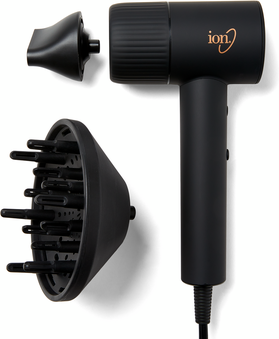
Ion Travel Hair DryerStyle from anywhere with the ion® Travel Hair Dryer. Designed to deliver salon-quality performance in a compact, travel-friendly design, this lightweight dryer is powered by a high-performance brushless motor for fast, efficient drying with powerful...39,99 $*Shipping: 0,00 $Secure redirect to the provider
-
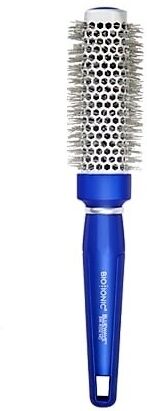
Bio Ionic BlueWave NanoIonic Conditioning Brush MediumHealth and Beauty Brushes Bio Ionic BlueWave NanoIonic Conditioning Brush Medium The shaping capabilities of a round brush with the smoothing powers of a palette, this brush gives it all. The uniquely waved bristles provide extra tension, allowing you to get right to the roots and comb all the way to the tip of the hair. Use the flat side to smooth and the rounded corners to create volume. Key Benefits: Unique square round shape. Benefit of a round brush and a palette. Wavy bristles for added tension. Soft-touch, easy-grip handle Fact: The smaller the barrel of your brush, the more shape it will provide. For soft blowouts with lots of shape and movement, go down 1 size less than you normally would.19,98 £*Shipping: 3,99 £Secure redirect to the provider
-
Bio Ionic BlueWave NanoIonic Conditioning Brush SmallHealth and Beauty Brushes Bio Ionic BlueWave NanoIonic Conditioning Brush Small The shaping capabilities of a round brush with the smoothing powers of a palette, this brush gives it all. The uniquely waved bristles provide extra tension, allowing you to get right to the roots and comb all the way to the tip of the hair. Use the flat side to smooth and the rounded corners to create volume. Key Benefits: Unique square round shape. Benefit of a round brush and a palette. Wavy bristles for added tension. Soft-touch, easy-grip handle Fact: The smaller the barrel of your brush, the more shape it will provide. For soft blowouts with lots of shape and movement, go down 1 size less than you normally would.20,23 £*Shipping: 3,99 £Secure redirect to the provider


-
What is the difference between ion formation and ionic bonding?
Ion formation is the process by which an atom gains or loses electrons to become a charged particle called an ion. This can happen through the transfer of electrons between atoms. Ionic bonding, on the other hand, is the attraction between two oppositely charged ions. This attraction forms a strong bond between the ions, creating an ionic compound. In summary, ion formation involves the creation of charged particles, while ionic bonding involves the attraction between these charged particles to form a compound. **
-
What is the difference between an ionic bond and an ion compound?
An ionic bond is a type of chemical bond that forms between two atoms when one atom transfers one or more electrons to another atom. This results in the formation of positively and negatively charged ions, which are attracted to each other due to their opposite charges. An ion compound, on the other hand, is a compound that is made up of positively and negatively charged ions held together by ionic bonds. In other words, an ion compound is a substance that is composed of ions bonded together through ionic bonds. **
-
What happens to the hair after conditioning?
After conditioning, the hair becomes smoother, softer, and more manageable. The conditioner helps to seal the hair cuticle, which reduces frizz and adds shine. It also helps to detangle the hair, making it easier to style. Overall, conditioning helps to improve the overall health and appearance of the hair. **
-
What is the difference between an ionic bond, an ionic lattice, and an ionic compound?
An ionic bond is a type of chemical bond that forms between two atoms when one atom transfers one or more electrons to another atom. An ionic lattice refers to the three-dimensional arrangement of ions in a regular, repeating pattern in an ionic compound. An ionic compound is a chemical compound composed of ions held together by ionic bonds. In summary, an ionic bond is the bond formed between two atoms, an ionic lattice is the arrangement of ions in a compound, and an ionic compound is the overall chemical compound formed by ionic bonds. **


What is an acid residue ion, an oxonium ion, and a hydronium ion?
An acid residue ion is a fragment of a molecule that remains after a hydrogen ion is removed from an acid. An oxonium ion is a positively charged ion formed by the addition of a proton to an oxygen atom. A hydronium ion is a positively charged ion formed by the combination of a water molecule with an extra proton, commonly found in aqueous solutions of acids. **
Ionic bond or molecule?
An ionic bond is formed when one atom transfers electrons to another atom, resulting in the formation of positively and negatively charged ions that are held together by electrostatic forces. On the other hand, a molecule is formed when two or more atoms share electrons to achieve a stable electron configuration. Therefore, the main difference between an ionic bond and a molecule is the way in which atoms are held together - through transfer of electrons in an ionic bond, and through sharing of electrons in a molecule. **
Top-Angebote
Products related to Ion-Ionic-Conditioning-Hair:
-
Ion Ionic Conditioning Hair DryerThis hair dryer emits millions of natural negative ions that break down water droplets, letting you dry your hair faster with less damage. Far-infrared heat allows hair to dry from the inside out, helping it retain its natural moisture. The cuticle...74,99 $*Shipping: 0,00 $Secure redirect to the provider
-
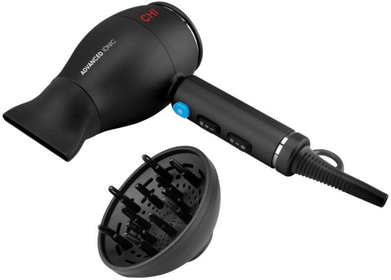
CHI Ionic Compact Hair DryerCHI 1875 Series Advanced Ionic Compact Hair Dryer features a built-in Ion Generator that emits Negative Ions to reduce frizz and increase shine. It also decreases the drying time by breaking apart water molecules, which makes them evaporate faster,...129,99 $*Shipping: 0,00 $Secure redirect to the provider
-
Ion Travel Hair DryerStyle from anywhere with the ion® Travel Hair Dryer. Designed to deliver salon-quality performance in a compact, travel-friendly design, this lightweight dryer is powered by a high-performance brushless motor for fast, efficient drying with powerful...39,99 $*Shipping: 0,00 $Secure redirect to the provider
-
Bio Ionic BlueWave NanoIonic Conditioning Brush MediumHealth and Beauty Brushes Bio Ionic BlueWave NanoIonic Conditioning Brush Medium The shaping capabilities of a round brush with the smoothing powers of a palette, this brush gives it all. The uniquely waved bristles provide extra tension, allowing you to get right to the roots and comb all the way to the tip of the hair. Use the flat side to smooth and the rounded corners to create volume. Key Benefits: Unique square round shape. Benefit of a round brush and a palette. Wavy bristles for added tension. Soft-touch, easy-grip handle Fact: The smaller the barrel of your brush, the more shape it will provide. For soft blowouts with lots of shape and movement, go down 1 size less than you normally would.19,98 £*Shipping: 3,99 £Secure redirect to the provider
-
How is the ion lattice formed in ionic bonding?
In ionic bonding, positively charged metal ions lose electrons to negatively charged non-metal ions. This transfer of electrons results in the formation of a lattice structure where the positively and negatively charged ions are held together by strong electrostatic forces. The ions arrange themselves in a repeating pattern to maximize the attraction between opposite charges, forming a stable ionic lattice. This lattice structure is what gives ionic compounds their characteristic properties such as high melting and boiling points. **
-
What is an ion lattice or an ionic crystal?
An ion lattice or an ionic crystal is a three-dimensional arrangement of positively and negatively charged ions held together by electrostatic forces. In an ionic crystal, the positively charged ions are surrounded by negatively charged ions and vice versa, creating a stable and repeating pattern. This arrangement gives ionic crystals their characteristic properties, such as high melting and boiling points, brittleness, and electrical conductivity in molten or dissolved form. Examples of ionic crystals include sodium chloride (table salt) and calcium fluoride. **
-
What is the difference between ion formation and ionic bonding?
Ion formation is the process by which an atom gains or loses electrons to become a charged particle called an ion. This can happen through the transfer of electrons between atoms. Ionic bonding, on the other hand, is the attraction between two oppositely charged ions. This attraction forms a strong bond between the ions, creating an ionic compound. In summary, ion formation involves the creation of charged particles, while ionic bonding involves the attraction between these charged particles to form a compound. **
-
What is the difference between an ionic bond and an ion compound?
An ionic bond is a type of chemical bond that forms between two atoms when one atom transfers one or more electrons to another atom. This results in the formation of positively and negatively charged ions, which are attracted to each other due to their opposite charges. An ion compound, on the other hand, is a compound that is made up of positively and negatively charged ions held together by ionic bonds. In other words, an ion compound is a substance that is composed of ions bonded together through ionic bonds. **
Similar search terms for Ion-Ionic-Conditioning-Hair
-
Bio Ionic BlueWave NanoIonic Conditioning Brush SmallHealth and Beauty Brushes Bio Ionic BlueWave NanoIonic Conditioning Brush Small The shaping capabilities of a round brush with the smoothing powers of a palette, this brush gives it all. The uniquely waved bristles provide extra tension, allowing you to get right to the roots and comb all the way to the tip of the hair. Use the flat side to smooth and the rounded corners to create volume. Key Benefits: Unique square round shape. Benefit of a round brush and a palette. Wavy bristles for added tension. Soft-touch, easy-grip handle Fact: The smaller the barrel of your brush, the more shape it will provide. For soft blowouts with lots of shape and movement, go down 1 size less than you normally would.20,23 £*Shipping: 3,99 £Secure redirect to the provider
-
Ion ion 24K Rapid Recovery Peptide Leave-In Hair TreatmentIon® 24K Rapid Recovery Peptide Leave-In Hair Treatment is a lightweight, fast-absorbing leave-in designed to reverse damage from root to tip. Powered by amino peptides for strong hair, this scientifically advanced formula helps maintain nearly 69%...29,99 $*Shipping: 0,00 $Secure redirect to the provider
-
HOT TOOLS Ionic Travel DryerAre you looking for the perfect hair dryer? And not just perfect, but THE perfect hair dryer? The one you can take with you anywhere and know you’ll turn heads no matter where you go? We’re talking the gym, on vacation, that business trip. Well, Hot...27,00 $*Shipping: 0,00 $Secure redirect to the provider
-
What happens to the hair after conditioning?
After conditioning, the hair becomes smoother, softer, and more manageable. The conditioner helps to seal the hair cuticle, which reduces frizz and adds shine. It also helps to detangle the hair, making it easier to style. Overall, conditioning helps to improve the overall health and appearance of the hair. **
-
What is the difference between an ionic bond, an ionic lattice, and an ionic compound?
An ionic bond is a type of chemical bond that forms between two atoms when one atom transfers one or more electrons to another atom. An ionic lattice refers to the three-dimensional arrangement of ions in a regular, repeating pattern in an ionic compound. An ionic compound is a chemical compound composed of ions held together by ionic bonds. In summary, an ionic bond is the bond formed between two atoms, an ionic lattice is the arrangement of ions in a compound, and an ionic compound is the overall chemical compound formed by ionic bonds. **
-
What is an acid residue ion, an oxonium ion, and a hydronium ion?
An acid residue ion is a fragment of a molecule that remains after a hydrogen ion is removed from an acid. An oxonium ion is a positively charged ion formed by the addition of a proton to an oxygen atom. A hydronium ion is a positively charged ion formed by the combination of a water molecule with an extra proton, commonly found in aqueous solutions of acids. **
-
Ionic bond or molecule?
An ionic bond is formed when one atom transfers electrons to another atom, resulting in the formation of positively and negatively charged ions that are held together by electrostatic forces. On the other hand, a molecule is formed when two or more atoms share electrons to achieve a stable electron configuration. Therefore, the main difference between an ionic bond and a molecule is the way in which atoms are held together - through transfer of electrons in an ionic bond, and through sharing of electrons in a molecule. **
* All prices are inclusive of VAT and, if applicable, plus shipping costs. The offer information is based on the details provided by the respective shop and is updated through automated processes. Real-time updates do not occur, so deviations can occur in individual cases. ** Note: Parts of this content were created by AI.