Buy kleinteile.eu ?
We are moving the project
kleinteile.eu .
Are you interested in purchasing the domain
kleinteile.eu ?
domain@kv-gmbh.de · 0541-91531010
Buy kleinteile.eu ?
How do you calculate the braking distance, the braking process, and the braking deceleration?
The braking distance can be calculated using the formula: braking distance = (initial velocity^2) / (2 * deceleration), where the deceleration is the rate at which the vehicle slows down. The braking process involves the driver applying the brakes, which causes friction between the brake pads and the wheels, leading to a decrease in the vehicle's speed. The braking deceleration can be calculated by dividing the change in velocity by the time it takes for the vehicle to come to a complete stop. **
How do you calculate the braking time and braking distance?
Braking time and braking distance can be calculated using the formula: Braking distance = (initial velocity^2) / (2 * deceleration) Where initial velocity is the speed of the vehicle before braking, and deceleration is the rate at which the vehicle slows down. Braking time can be calculated by dividing the braking distance by the initial velocity. These calculations are based on the assumption of constant deceleration, and may vary depending on factors such as road conditions and the vehicle's braking system. **

Similar search terms for Braking
Top-Angebote
Products related to Braking:
-
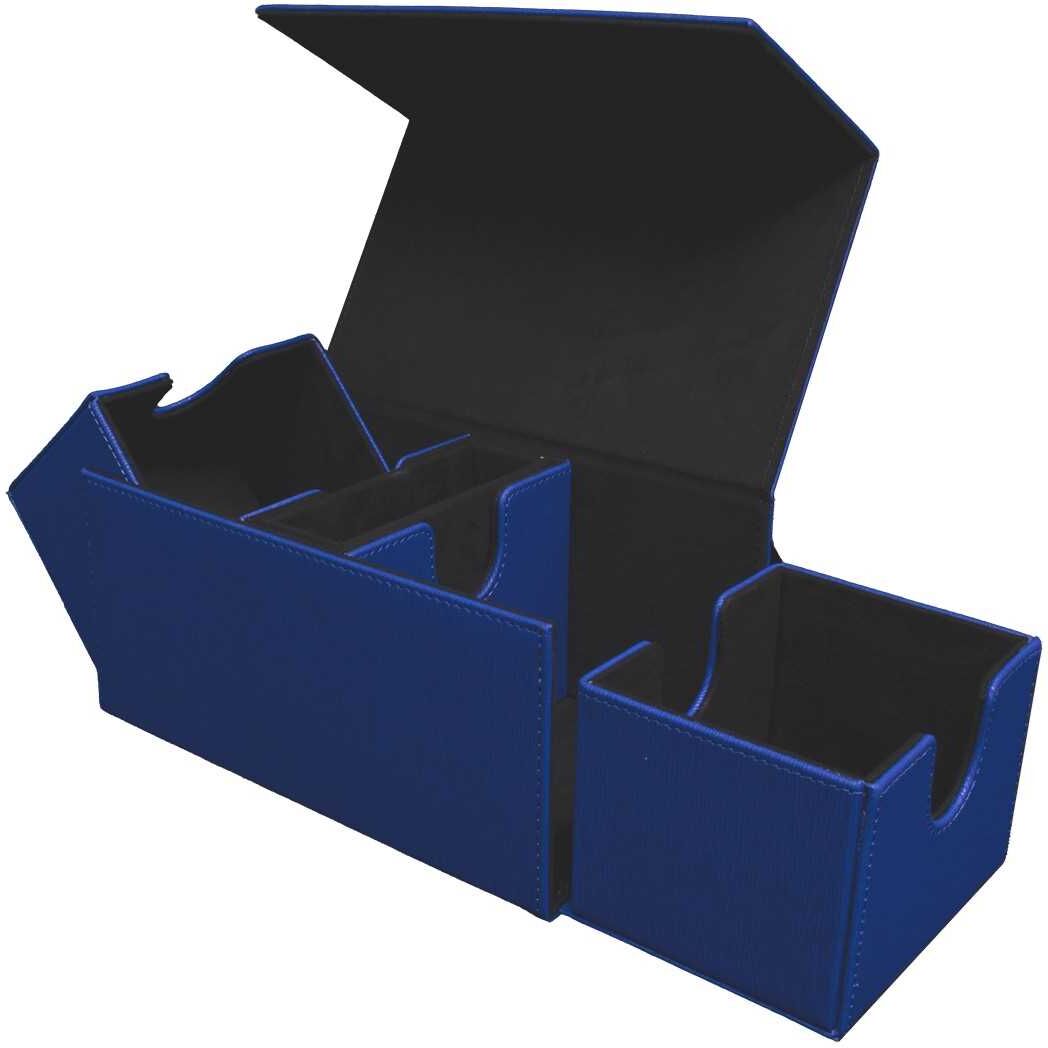
Legion Supplies Legion Sentinel Duo - Blue for Card Game AccessoriesKeep your trading-card decks organised and protected with the Legion Sentinel Duo in blue. This sturdy deck box is designed for players who want convenient storage for multiple sleeved card decks, plus space for essential game accessories. The Legion Sentinel Duo features two separate compartments, each accommodating up to 100 double-sleeved cards. A central compartment provides room for tokens, dice, and other small accessories. The removable insert lets you adjust the central storage area to suit your setup. The textured vinyl exterior provides durable everyday protection, while the smooth interior helps protect cards and sleeves during storage. The magnetic lid keeps the box securely closed between games. Grip cut-outs make it easier to remove decks from the compartments. With its dual-deck layout and flexible central storage, the Sentinel Duo is a practical choice for organised tabletop gaming and card collection storage.42,99 £*Shipping: 3,95 £Secure redirect to the provider
-
Inspire Daily Merch Fish Tank Cartoon Magic Jewelry, Cake Decoration, Aquarium Accessories, Fish Farming Supplies Fish Tank Cartoon Magic Jewelry, Cake Decoration, Aquarium Accessories, Fish Farming SuppliesTransform Your Fish Tank with Cartoon Magic Decorations Add a touch of whimsy to your fish tank with this Cartoon Magic Jewelry. This Fish Tank Decoration features a suspended design that creates a unique visual effect in your aquarium, making it a...32,97 $*Shipping: 0,00 $Secure redirect to the provider
-
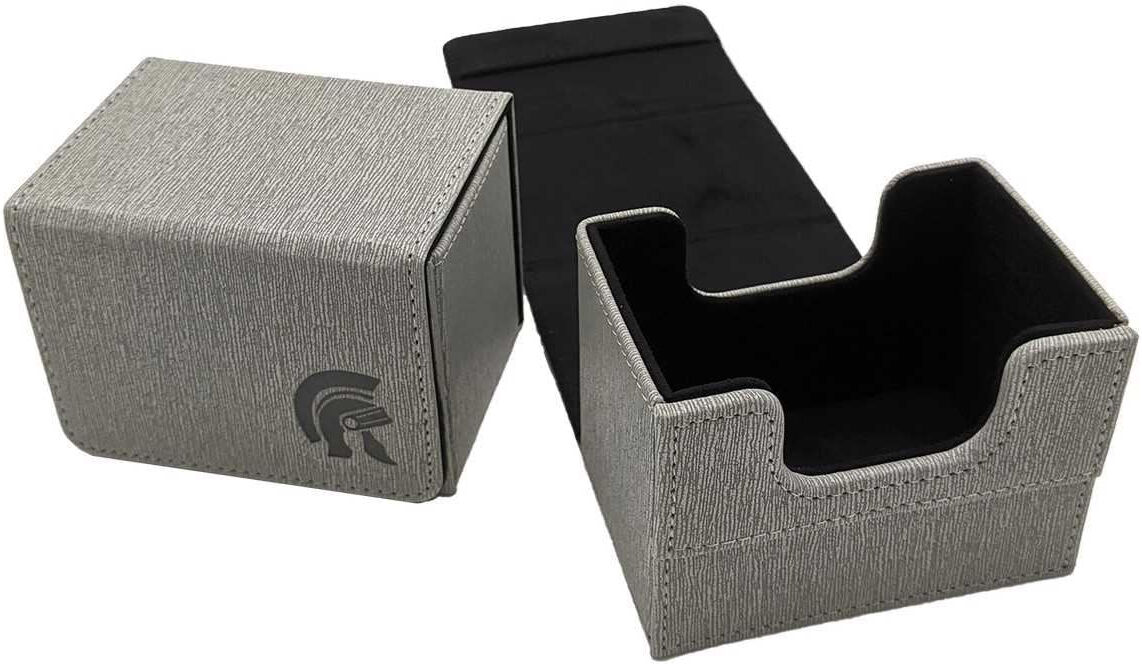
Legion Supplies Legion Sentinel Deck Box 80 - Grey for Card Game AccessoriesProtect your trading card deck with the Legion Sentinel Deck Box 80. This grey deck box is designed to hold up to 80 double-sleeved cards, making it perfect for storing a complete deck and keeping cards together between games or during transport. The durable textured vinyl outer cover provides a sturdy layer of protection, while the soft, smooth interior helps prevent cards and sleeves from catching as they are placed inside or removed. A strong magnetic lid with a stepped closure helps keep the box securely shut and reduces the chance of the lid sliding open. The compact design features easy-grip cut-outs, making it simpler to lift cards from the box when you're ready to play. The Legion Sentinel Deck Box 80 is suitable for tabletop gaming collections, whether used at home, at events, or alongside other deck boxes.15,99 £*Shipping: 3,95 £Secure redirect to the provider
-
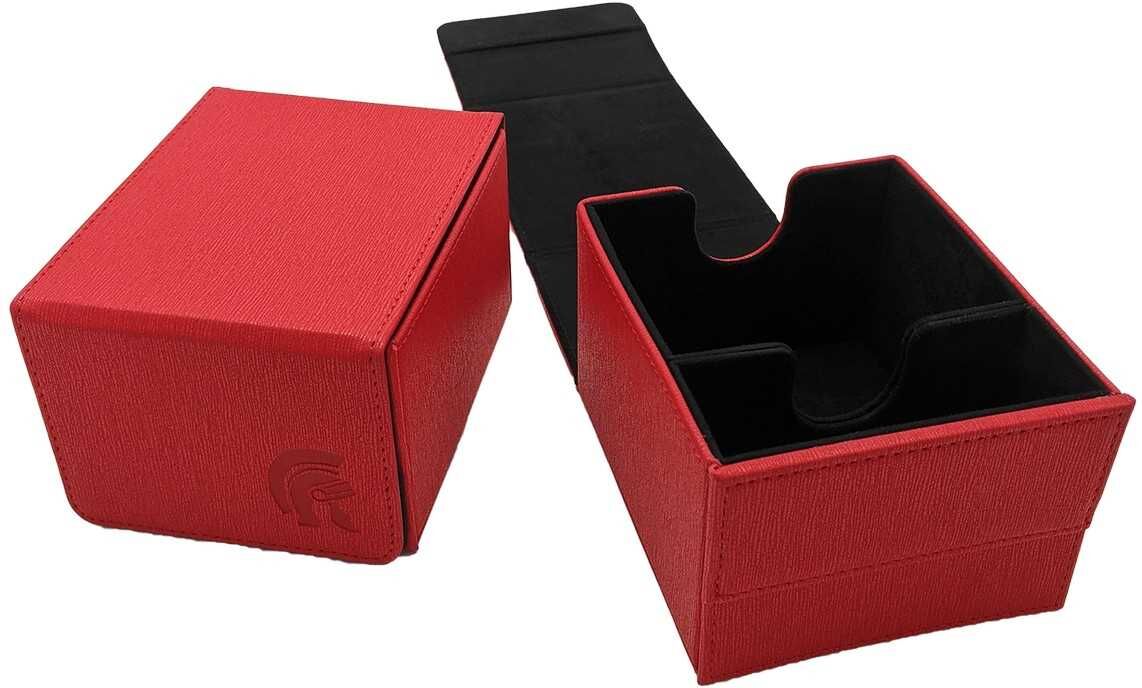
Legion Supplies Legion Sentinel Deck Box 80 - Red for Card Game AccessoriesProtect your card collection with the Legion Sentinel Deck Box 80 in red. This compact deck box is designed for trading card games and other standard-sized card collections, keeping your cards together and protected between games. It holds up to 80 double-sleeved cards, making it suitable for organized play and everyday deck storage. The durable textured vinyl exterior is designed for regular handling, while the soft, smooth interior helps prevent snagging on card sleeves. A strong magnetic lid with a stepped closure ensures the box stays shut, and easy-grip cut-outs provide convenient card access. The compact format makes it easy to store and transport your deck, and the red finish makes it easy to identify in a collection. The Legion Sentinel Deck Box 80 is a practical solution for protecting your favorite deck.15,99 £*Shipping: 3,95 £Secure redirect to the provider

-
What are the differences between braking to walking speed and braking?
Braking to walking speed typically involves gradually reducing speed until coming to a complete stop, whereas braking refers to the act of slowing down a moving vehicle. When braking to walking speed, the goal is to smoothly decelerate without any sudden stops, while braking may involve more forceful actions to slow down quickly. Additionally, braking to walking speed is often used in situations where a vehicle needs to stop at a precise location, such as at a crosswalk or intersection. **
-
How do you calculate braking time and braking distance in physics?
In physics, braking time and braking distance can be calculated using the equations of motion and the principles of kinematics. The braking time can be calculated using the equation t = v/u, where t is the braking time, v is the final velocity, and u is the initial velocity. The braking distance can be calculated using the equation d = (v^2 - u^2) / (2a), where d is the braking distance and a is the deceleration. These equations take into account the initial and final velocities, as well as the deceleration of the object to determine the braking time and distance. **
-
Is braking a reflex?
Braking can be considered a reflex in certain situations. When a driver reacts to a sudden obstacle or hazard on the road by immediately pressing the brake pedal, it can be seen as a reflexive action. This is because the response is automatic and occurs without conscious thought. However, braking can also be a learned behavior, as drivers are trained to use their brakes in specific situations through practice and experience. Therefore, while braking can be a reflex in some cases, it can also be a learned and intentional action. **
-
What is the formula for braking acceleration and braking time in physics?
The formula for braking acceleration is given by \( a = \frac{v_f - v_i}{t} \), where \( a \) is the braking acceleration, \( v_f \) is the final velocity, \( v_i \) is the initial velocity, and \( t \) is the time taken to come to a stop. The formula for braking time can be calculated using the equation \( t = \frac{v_f - v_i}{a} \), where \( t \) is the braking time. These formulas are used to calculate the rate at which an object slows down when braking. **


What is the difference between a full braking and an emergency braking?
Full braking refers to applying the brakes with maximum force in a controlled manner to slow down or stop the vehicle. This can be done in response to normal traffic conditions or when approaching a stop sign or traffic light. On the other hand, emergency braking is a sudden and forceful application of the brakes in response to an unexpected hazard or danger, such as a pedestrian stepping into the road or a vehicle suddenly stopping in front. Emergency braking is typically done to avoid a collision and requires quick reflexes and a strong, immediate response from the driver. **
What is the difference between braking with a clutch and braking without?
Braking with a clutch involves pressing the clutch pedal while simultaneously applying the brakes, which disengages the engine from the transmission and allows the vehicle to coast to a stop. This method is often used in manual transmission vehicles to prevent stalling. On the other hand, braking without using the clutch means simply applying the brakes without disengaging the engine from the transmission, which can cause the vehicle to stall if the engine speed drops too low. In summary, the main difference is that braking with a clutch allows the vehicle to coast to a stop without stalling, while braking without the clutch can potentially lead to stalling if not done properly. **
Top-Angebote
Products related to Braking:
-
KS TOOLS 120.1050 Pipe Bending EquipmentDiameter [inch]: 1/8, 3/16, 1/4; Diameter: 3,0, 4,75, 6,0; Material: Copper, Brass, Steel Pipe, Tool Steel; Bending Radius up to [°]: 90; Thread Type: with metric thread, with inch thread; Total Length [mm]: 140,0; Weight [g]: 150; Length [mm]: 14020,49 £*Shipping: 8,45 £Secure redirect to the provider
-
Legion Supplies Legion Sentinel Duo - Blue for Card Game AccessoriesKeep your trading-card decks organised and protected with the Legion Sentinel Duo in blue. This sturdy deck box is designed for players who want convenient storage for multiple sleeved card decks, plus space for essential game accessories. The Legion Sentinel Duo features two separate compartments, each accommodating up to 100 double-sleeved cards. A central compartment provides room for tokens, dice, and other small accessories. The removable insert lets you adjust the central storage area to suit your setup. The textured vinyl exterior provides durable everyday protection, while the smooth interior helps protect cards and sleeves during storage. The magnetic lid keeps the box securely closed between games. Grip cut-outs make it easier to remove decks from the compartments. With its dual-deck layout and flexible central storage, the Sentinel Duo is a practical choice for organised tabletop gaming and card collection storage.42,99 £*Shipping: 3,95 £Secure redirect to the provider
-
Inspire Daily Merch Fish Tank Cartoon Magic Jewelry, Cake Decoration, Aquarium Accessories, Fish Farming Supplies Fish Tank Cartoon Magic Jewelry, Cake Decoration, Aquarium Accessories, Fish Farming SuppliesTransform Your Fish Tank with Cartoon Magic Decorations Add a touch of whimsy to your fish tank with this Cartoon Magic Jewelry. This Fish Tank Decoration features a suspended design that creates a unique visual effect in your aquarium, making it a...32,97 $*Shipping: 0,00 $Secure redirect to the provider
-
How do you calculate the braking distance, the braking process, and the braking deceleration?
The braking distance can be calculated using the formula: braking distance = (initial velocity^2) / (2 * deceleration), where the deceleration is the rate at which the vehicle slows down. The braking process involves the driver applying the brakes, which causes friction between the brake pads and the wheels, leading to a decrease in the vehicle's speed. The braking deceleration can be calculated by dividing the change in velocity by the time it takes for the vehicle to come to a complete stop. **
-
How do you calculate the braking time and braking distance?
Braking time and braking distance can be calculated using the formula: Braking distance = (initial velocity^2) / (2 * deceleration) Where initial velocity is the speed of the vehicle before braking, and deceleration is the rate at which the vehicle slows down. Braking time can be calculated by dividing the braking distance by the initial velocity. These calculations are based on the assumption of constant deceleration, and may vary depending on factors such as road conditions and the vehicle's braking system. **
-
What are the differences between braking to walking speed and braking?
Braking to walking speed typically involves gradually reducing speed until coming to a complete stop, whereas braking refers to the act of slowing down a moving vehicle. When braking to walking speed, the goal is to smoothly decelerate without any sudden stops, while braking may involve more forceful actions to slow down quickly. Additionally, braking to walking speed is often used in situations where a vehicle needs to stop at a precise location, such as at a crosswalk or intersection. **
-
How do you calculate braking time and braking distance in physics?
In physics, braking time and braking distance can be calculated using the equations of motion and the principles of kinematics. The braking time can be calculated using the equation t = v/u, where t is the braking time, v is the final velocity, and u is the initial velocity. The braking distance can be calculated using the equation d = (v^2 - u^2) / (2a), where d is the braking distance and a is the deceleration. These equations take into account the initial and final velocities, as well as the deceleration of the object to determine the braking time and distance. **
Similar search terms for Braking
-
Legion Supplies Legion Sentinel Deck Box 80 - Grey for Card Game AccessoriesProtect your trading card deck with the Legion Sentinel Deck Box 80. This grey deck box is designed to hold up to 80 double-sleeved cards, making it perfect for storing a complete deck and keeping cards together between games or during transport. The durable textured vinyl outer cover provides a sturdy layer of protection, while the soft, smooth interior helps prevent cards and sleeves from catching as they are placed inside or removed. A strong magnetic lid with a stepped closure helps keep the box securely shut and reduces the chance of the lid sliding open. The compact design features easy-grip cut-outs, making it simpler to lift cards from the box when you're ready to play. The Legion Sentinel Deck Box 80 is suitable for tabletop gaming collections, whether used at home, at events, or alongside other deck boxes.15,99 £*Shipping: 3,95 £Secure redirect to the provider
-
Legion Supplies Legion Sentinel Deck Box 80 - Red for Card Game AccessoriesProtect your card collection with the Legion Sentinel Deck Box 80 in red. This compact deck box is designed for trading card games and other standard-sized card collections, keeping your cards together and protected between games. It holds up to 80 double-sleeved cards, making it suitable for organized play and everyday deck storage. The durable textured vinyl exterior is designed for regular handling, while the soft, smooth interior helps prevent snagging on card sleeves. A strong magnetic lid with a stepped closure ensures the box stays shut, and easy-grip cut-outs provide convenient card access. The compact format makes it easy to store and transport your deck, and the red finish makes it easy to identify in a collection. The Legion Sentinel Deck Box 80 is a practical solution for protecting your favorite deck.15,99 £*Shipping: 3,95 £Secure redirect to the provider
-
Legion Supplies Legion Sentinel Deck Box 80 - Green for Card Game AccessoriesProtect your trading-card deck with the Legion Sentinel Deck Box 80 in green. Its durable textured vinyl exterior helps shield cards from everyday knocks, while the soft, smooth interior is designed to be gentle on cards and sleeves. The box holds up to 80 double-sleeved cards, making it suitable for many constructed decks and organised play setups. A magnetic lid with a stepped closure helps keep the box securely shut, while the wraparound design provides protection around the deck. Easy-grip cut-outs at the front make it simpler to remove cards when you're ready to play. The green finish adds a touch of colour to your gaming setup. Made by Legion Supplies, this deck box is a practical accessory for any card game enthusiast.15,99 £*Shipping: 3,95 £Secure redirect to the provider
-
Legion Supplies Legion Sentinel Deck Box 100 - Grey for Card Game AccessoriesProtect your trading card deck with the Legion Sentinel Deck Box 100 in grey. This durable deck box combines a textured vinyl exterior with a smooth interior to help protect card sleeves during storage and handling. It can hold up to 100 double-sleeved cards, making it suitable for many standard-sized trading card decks. The magnetic lid features a stepped closure to prevent the cover from sliding open, while the front cut-outs provide a firm grip when removing your deck. The compact format allows for organised deck storage, making it a practical choice for protecting a frequently played deck at home, during events, or while travelling.17,99 £*Shipping: 3,95 £Secure redirect to the provider
-
Is braking a reflex?
Braking can be considered a reflex in certain situations. When a driver reacts to a sudden obstacle or hazard on the road by immediately pressing the brake pedal, it can be seen as a reflexive action. This is because the response is automatic and occurs without conscious thought. However, braking can also be a learned behavior, as drivers are trained to use their brakes in specific situations through practice and experience. Therefore, while braking can be a reflex in some cases, it can also be a learned and intentional action. **
-
What is the formula for braking acceleration and braking time in physics?
The formula for braking acceleration is given by \( a = \frac{v_f - v_i}{t} \), where \( a \) is the braking acceleration, \( v_f \) is the final velocity, \( v_i \) is the initial velocity, and \( t \) is the time taken to come to a stop. The formula for braking time can be calculated using the equation \( t = \frac{v_f - v_i}{a} \), where \( t \) is the braking time. These formulas are used to calculate the rate at which an object slows down when braking. **
-
What is the difference between a full braking and an emergency braking?
Full braking refers to applying the brakes with maximum force in a controlled manner to slow down or stop the vehicle. This can be done in response to normal traffic conditions or when approaching a stop sign or traffic light. On the other hand, emergency braking is a sudden and forceful application of the brakes in response to an unexpected hazard or danger, such as a pedestrian stepping into the road or a vehicle suddenly stopping in front. Emergency braking is typically done to avoid a collision and requires quick reflexes and a strong, immediate response from the driver. **
-
What is the difference between braking with a clutch and braking without?
Braking with a clutch involves pressing the clutch pedal while simultaneously applying the brakes, which disengages the engine from the transmission and allows the vehicle to coast to a stop. This method is often used in manual transmission vehicles to prevent stalling. On the other hand, braking without using the clutch means simply applying the brakes without disengaging the engine from the transmission, which can cause the vehicle to stall if the engine speed drops too low. In summary, the main difference is that braking with a clutch allows the vehicle to coast to a stop without stalling, while braking without the clutch can potentially lead to stalling if not done properly. **
* All prices are inclusive of VAT and, if applicable, plus shipping costs. The offer information is based on the details provided by the respective shop and is updated through automated processes. Real-time updates do not occur, so deviations can occur in individual cases. ** Note: Parts of this content were created by AI.